Vroom Vroom
Spending our money..... wheeeee!

It always costs less to repair a car than buy a new one.
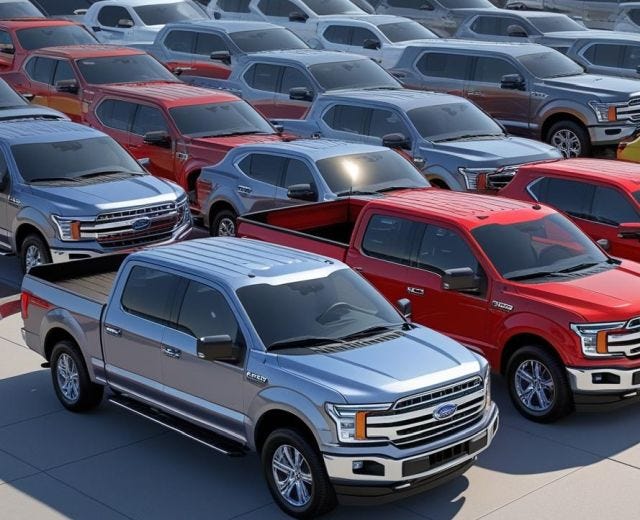
Our city spent $100k short of a million in new motorized vehicles last year. Each was on the “consent agenda” where the City Council only speaks if they disagree (none did, they rarely do).
The Consent Agenda is not really used for $$$ purchases anywhere but here. (Not that I have ever seen, anyway.) Usually spending money is something that councils discuss, so the public is aware of the decisions. The City Council is elected to represent the people who elected them.
The Consent Agenda is a way to group non-controversial items into a single item for one motion and one vote. It’s a way to save time for more complex and “important” issues.
I guess spending money is deemed neither controversial nor important.
Only ONE vehicle was purchased last year was really needed, in my opinion. It was a 2006 Chevy Colorado purchased for Police use. This truck was a DOG (appologies to canines everywhere) with such a poor ratings (when new) it only had an expected lifespan of 3.5 years, or 90 to 120k miles. We put 97k miles on ours in 18 years. I’ll bet it was miserable to drive. (Of course, I wonder why we purchased it, in the first place.) I am actually fine with the police cars purchases. But, what about all the other cars/equipment we just had to replace??
NOPE.
All the rest could have been kept for a few more years, some a decade, maybe more.
Extending vehicle use (lifespan) reduces the frequency of new vehicle acquisitions, which frees up capital that can be allocated to other, essential city services or infrastructure. (I’m sure that a big chunk of that $900,000+ was needed elsewhere.)
While purchasing NEW may seem appealing (new car smell!) the Total Cost of Ownership (TCO) over it’s lifetime can be up to 5 times higher than its initial purchase price. I never see any TCO analysis in these City Council packets. I’ve never seen any justification other than some statement that says vaguely “at end of useful life” which, I disagree with. Justify it, please?
I don’t see the anticipated (or actual) repair costs. I don’t see anything about the actual expected yearly costs to maintain the old vehicle. I don’t see mileage logs, or MPG. I sure don’t see where these vehicles are kept, or how stored. I certainly don’t see how much will be recouped from the sale of the surplus vehicles.
What we need is a real analysis. Gee if ONLY there were a way that we could evaluate these things… oh wait, there is. It’s the TCO.
TCO includes:
The initial cost of the vehicle
The return dollars when the vehicle is sold
All the costs in between buying and selling the vehicle
The cost of ownership is vital to fleet management. Right now, it seems to be all based on “oh it looks old” or “it might need repairs in the future”. Well, duh! I’ve owned cars. I think everyone who has ever owned a car knows that you need to maintain them, and wash them, and put on new tires. I can’t believe this whole “end of useful life” stuff, when these are all low-mileage cars.
(For the record, I like cars. I have, for my entire life, purchased used cars, with 70 or 80k miles, already. That’s NEW TO ME. But I am frugal. One of my cars had nearly 500k miles before I finally decided it was actually beyond repair.)
There isn’t any analysis given to the council (or public) on these vehicles. Has anyone actually looked at how these vehicles are used? Who uses them? How often is the oil changed. Who does the repairs? Is the new replacement actually evaluated as to IF it meets the needs of the job at the lowest possible cost? Very few of these purchases take into account how LITTLE these city vehicles are actually used.
Given our current City Council, are they even aware that extending the lifespan of an existing vehicle avoids significant carbon emissions associated with the manufacturing process of new vehicles, which can account for approximately 20% of a vehicle’s total lifetime emissions.
I was of the impression that the majority of our current City Council were all behind the climate change rhetoric, and carbon emmission reduction.
New vehicles requires a vast array of natural resources. Extending the lifespan of existing vehicles reduces the demand for new materials and minimizes the environmental impact of resource extraction and manufacturing.
If we keep the old vehicles, and maintain them/fix them, it minimizes the amount of waste generated by the automotive industry and reduces the number of end-of-life vehicles sent to landfills.
Guess they aren’t as “green and crunchy” as they claim. Why does no one consider environmentalism in these purchases?
I’m actually more focused on fiscal responsibility. We certainly are NOT being fiscally responsible. The City Council should not just approve these purchases when they aren’t fiscally sound decisions.
I am saying they are being “penny-wise, pound foolish” (meaning being stingy with small amounts of money, but wasteful with larger sums).
Nearly a million dollars in spending shouldn’t be overlooked as insignificant. Our city spending is up 40% in the last two years, this is significant. To quote Benjamin Franklin: “watch the pennies and the dollars will take care of themselves.” Or, “even a small leak can sink a big ship”. I’m more inclined towards parsimony — prudent and judicious management of property and wealth.
We replaced TWO forklifts (one had no disclosed hours used) the other only 1,650 hours. Sure, they were old (but so am I). Forklifts last for 10,000 hours (just like tractors) with many still in use at 20,000 hours.
City Staff TRIED to swap one with a very expensive electric forklift, and then (wisely) changed their minds, and reverted to a propane powered one.
I see no reason why either was replaced — we had two of the best rated brands: Toyota (which can get spendy with replacement parts) and Caterpillar. We replaced them with Hysters (which consistently rates lower). Why?
A1987 Caterpillar with 1,650 hours on it — is very lightly used. In 37-years we couldn’t use it for more than 45 hours A YEAR? (that’s 45-minutes per work day, less holidays and vacation time).
Come on! THAT FORKLIFT was good for 10,000 hours of use….so it could have lasted well into the 2050’s.
(I’m sure in the next 10 years replacement parts would get scarce.)
One thing is certain, there was no fire under anyone’s ass to rush into this purchase. We replaced a barely used piece of equipment with a $68,200.00 device. Why??? Why’d we buy top of the line?
I’m not seeing any adult making any decisions here. Who is giggling in the backroom over this? “We are spending other people’s money…wheeeeee”.
Okay, so back to the vehicles.
We replaced a 2004 GMC 1500 with 107,000 miles (and the council approved $25k over the budgeted amount). It must have included all the bells-and-whistles because the replacement was $66k, while the lowest MSRP was around $48k.
What I have a problem with is the 20 year old GMC was called “end of service life” when that model, easily attains 200k miles, and some motor on, all the way to 500k. We only used the thing 5,350 miles a year, or 446 miles a month. Hardly high use.
That’s only 15 round-trips to Costco!
We replaced another 2004 GMC 1500 with 91,000 miles. (380 miles a month) With another $66k. Wheee… “not our money” city staff says.
380 miles = 13.5 trips to Costco.
Our Finance Department had a 2004 GMC Canyon Pickup with 126,000 miles. Those vehicles are know to exceed 200k miles. The average “useable lifespan” is estimated at 169,523 miles. This car only drove about 525 miles a month, so it should have had another 6 years of useable life. Okay, for argument’s sake: five years. We could have replaced this in 2029. Instead we spent $44,132.66 ($5,550 over the budgeted $38,000) on a 2024 Ford Maverick AWD Pickup and canopy.
Why does the Finance Department have a pickup? Is that to haul all of our tax money to the bank?
We replaced a Pool Vehicle — one used “to minimize costs associated with traveling to meetings and conferences out of town..” Which is a great idea. Bravo. The carpool mileage reimbursement (for private vehicles) is $0.70 per mile, so since this car traveled 8,400 miles a year the reimbursement would have been $5,880. Makes sense we have a pool vehicle. (Motor pool, not swimming pool.)
However, we replaced a 2014 Hyundai Sonata Hybrid Sedan with 82k miles, with a 2024 Toyota Camry Hybrid Sedan with a price tag of $36,072. The Hyundai had a lifepan expectation of 116,144 miles. It’s only driven about 700 miles a month. This NEW car has a slightly longer lifespan (170,408). But, did we really need to dump a car that still had, at least, two or three years of life in it?
I realize I’m nitpicking, but the one that really galled me is the NEW one funded by STRs. (I’ve saved the best for last).
Community and Economic Development needed a brand new car, for their brand new building inspector. Funding for it was through a transfer from revenue collection anticipated from short-term rental licensing fees. So, we purchased a 2023 Ford Mach-E SUV Battery-Electric Vehicle at a cost of $53,292.82.
The reviews are terrible. (Reddit is filled with bitching. The car sites can’t stop complaining.) This vehicle already had recalls due to overheating battery contactors, when we purchased it. There was a recall because the electronic door locks remained locked, trapping occupants inside. (Seems like a downside for a building inspector?) The reports of battery cell failure, battery drain, and other electric issues should all have been looked at before buying this lemon. To put it mildly: it has questionable reliability. This vehicle requires servicing by a dealer. (The low-end MSRP was $41,695, base model, lowest trim package, but we opted for a GT package. WHY?)
Why, on the back of the STR entrepeneurs, was this purchase made? Couldn’t a brand NEW position use one of the older pickup trucks? How about that pool Hyndai?
In the words of long past (RIP) Mayor Pat Downie “We can do better…”
Our City Council has forgotten (or never knew) that their job is that of a Board of Directors: to oversee the management and strategic direction of an organization, to ensure that it operates in the BEST INTERESTS of the stakeholders (citizens). The taxpayers should not sit and watch while the city just spends money freely.
To backup what I’ve written, I went through the 2024 year of city council meetings. These are the notes I made:
Vehicles/equipment replaced in 2024
Feb 20, 2024
Light Operations
(#148) 1987 Caterpillar Forklift 1,650 hours
Replaced with 2024 Hyster Electric Forklift
Cost: $68,200.00
(changed to a Hyster Model H60FT Propane Forklift in July, for a cost of $43,100)
Mar 19, 2024
Stormwater Division
NEW vehicle (2442) 2024 F150 4x4 Crew Cab with 3.5l PowerBoost Full Hybrid V6
Cost: $66,209.75 (over 2024-2029 planned budget by $6,209.75)
Wastewater Division
(#4600) 2004 GMC 1500 107,000 miles (“end of service life”)
Replaced with 2024 Ford F150 4x4 Crew Cab with 3.5 PowerBoost Full Hybrid V6
Cost: $66,209.75 (budgeted $40,700, council approved $25,509.75 increase)
Parks Department
(#4700) 2004 GMC 1500 Pickup 91,000 miles
Replaced with 2024 Ford F150 4x4 Crew Cab with 3.5 PowerBoost Full Hybrid V6
Cost: $66,209.75 (budgeted $50,000, council approved $16,209.75 increase)
Light Operations
(#4901) 2004 Toyota 10,000 forklift (no hours given) Note: if this was the 7FGU30 model, is exceptionally durable known to last beyond an average of 10,000 hours, with many in use to 20,000 hours.
Replaced with 2024 Hyster J100XN 10,000 Electric Forklift
Cost $68,200. (July 2 meeting changed this to a propane forklift, for same amount)
May 21, 2024
Finance Department
(#4401) 2004 GMC Canyon Pickup 126,000 miles
Replaced with 2024 Ford Maverick AWD Pickup with a Canopy
Cost $44,132.66 (Budgeted $38,000, council approved $5,550 increase)
Engineering Division
(#15) 1995 Chevrolet S10 4x4 Pickup 88,000 miles
Replaced with 2024 Ford Maverick AWD Pickup
Cost $38,640.53 (budgeted $41,500.)
Equipment Services Division Pool Vehicle*
(#1490) 2014 Hyundai Sonata Hybrid Sedan 82,000 miles
Replaced with 2024 Toyota Camry Hybrid Sedan
Cost $36,072 (budgeted $36,100)
*This vehicle is used “to minimize costs associated with travel to meetings and conferences out of town...”
June 04, 2024
Community and Economic Development
(#2401) New building inspector hired, so a NEW vehicle was needed.
(Funding was through a transfer from revenue collection anticipated from short-term rental licensing fees.)
New Vehicle 2023 Ford Mach-E SUV Battery-Electric Vehicle
Cost $53,292.82
July 16, 2024
Engineering Division
(#4300) 2004 GMC 1500 Truck 47,000 miles
Replaced with 2024 Ford F150 4x4 PowerBoost Hybrid Truck
Cost $65,595.86 (Budget $63,500, Council approved $2,095 extra)
Aug 20, 2024
Water Division
(#6701) 2006 GMC Canyon Truck 91,000 miles
Replaced with 2024 Ford F150 4x4 Crew Cab Truck PowerBoost Hybrid Truck
Cost $65,595.86 (Budget $53,400, Council approved $12,195.86 increase)
Sep 17, 2024
(no number) New vehicle purchase with innovation grant
Purchase Polaris Ranger XP 1000 Utility Vehicle
Cost $39,351.21
Dec 17, 2024
Police Division
(#0913) 2009 Ford Expedition 95,000 miles
(#1314) 2014 Chevrolet Tahoe 64,000 miles
(#6101) 2006 Chevrolet Colorado Pickup 97,000 miles
Replaced with
(#0913) 2025 Ford Police Interceptor SUV 3.0 liter engine
(#1314) 2025 Ford Police Interceptor SUV 3.0 liter engine
(#6101) 2025 Ford Police Interceptor K-9
Cost $276,195 ($261,900 budgeted. Council approved $14,295.)
The Police Package Ford Expedition (2009) can last for 200k to 250k miles.
The Chevy Tahoe (2014) has an average lifespan of 164,315 over a ten-year period. It’s considered “likely” to reach 250k miles, even with hard use, according to studies. The Chevy Colorado had a poor rating for a police car, and was only expected to have a lifespan of 3.5 years, to around 90k to 120k. They a poor choice and bad investment. This may be the only vehicle on the list that actually NEEDED replacing.
The 2025 Ford Police Interceptor SUV has a lifespan of 3 to 7 years, or between 75k to 130k miles, with the lower end expected in harsh winter areas, using salt on the roads. Many departments around the country that will maintain them to exceed 200k miles of use. There IS a concern about a premature water pump failure in these vehicles. Based on life cycle cost analysis, most departments will aim to replace the vehicles at 130k miles.
As I commented before I retired out of the Automotive/Commercial Truck industry. I'm about 90% onboard with your analysis. The 1987 Caterpillar even with low hours might have limited parts support as a nearly 40 year old machine. Warrants investigation if the downtime would be critical. Seals and gaskets age out and start failing. Other parts fatigue like bushings, chains, on the forklift mast. Are the new forklifts better suited to the tasks they are to perform? Its a question worth investigating.
Any well run larger construction/logging/industrial equipment rental business will have a comprehensive file on every piece of equipment. The city fleet should be no different. Each piece deserves evaluation and would the City be better served possibly buying a low hour used piece of Equipment from Pape Caterpillar or United Rentals. They rent/lease and maintain new equipment. Depreciation schedules are 3 fiscal years and you've achieved 100% depreciation. Usually that 3 year old piece of equipment can be bought very reasonably. Its had documented service and often the manufacturer will offer a limited warranty. They want to see that equipment gone and put in a fresh piece and start the cycle all over again. With the exception of Police vehicles I'd look at used Enterprise, Budget, Hertz rentals. Again they operate on a 3 fiscal year depreciation schedule. Depending on in-service dates these companies can gain 100% depreciation in as little as 370 days of service. You can get substantial savings over the price of new with remaining factory warranties. Since these cars once in municipal service don't get a lot of miles by calendar year 8 or 9 they'll still be considered low mileage and bring premium dollars at auction.